Friday, February 29, 2008

The Year of Living Dangerously (1982)


(Image from IMP Awards)


The Year of Living Dangerously (1982)

Peter Weir seems to be one of the most consistent filmmakers around - or rather, consistently good, since there are plenty of rubbish ones out there who are unwaveringly consistent. He also seems to take a lot of breaks between films, which is a shame, though perhaps that may be a reason for his consistency. Stylistically his films are linked by being generally restrained and unsentimental and full of detached observations. I like all of the films of his that I've seen, though the only one I'm a huge fan of is 'Master and Commander'. 'The Year of Living Dangerously' is one of his earlier films, but it still bears his hallmarks.

The year is 1965 and Guy Hamilton (Mel Gibson) is a reporter for the Australian Broadcasting Corporation who is assigned to work in Indonesia. It is a period of civil unrest, with President Sukarno caught in the middle of a brewing conflict between the military and the Communist Party. Guy is initially lost at sea even among the community of Western journalists stationed there until he is helped by Billy Kwan (Linda Hunt), a dwarf cameraman who feels a great empathy for the Indonesian people and has lots of connections. Billy sees decency in Guy, something the other journalists lack, and he therefore sets up key interviews for him. He then plays at being a puppeteer (a metaphor that is established very early on) to set Guy up with Jill Bryant (Sigourney Weaver), a young woman who works at the British Embassy. As the political situation grows more unstable, Guy's ambition grows with his journalistic successes and leads to him having to choose between his friends and his career.

It's a very textured film with a lot going on. On the one hand the film is the personal story of Guy Hamilton and his career and personal life. On the other it tells of the political and social landscape of Indonesia and the perspective of the foreign media against that landscape. And then there's the tragic story of Billy Kwan, who is the fabric that joins all of the other elements together and is in many ways the heart of the film. As I mentioned earlier, Weir's eye is that of a detached observer - this film acknowledges the complexity and tragedy of what is going on and looks upon it with sympathy, but never really takes sides or preaches. It feels even handed and respectful.

Guy Hamilton's journey and growth make for a compelling central narrative, though it also contains the film's weakest aspect - the love story. It's important to the character's arc in that it creates a dilemma and conflict and also provides an insight into his personal life, but I simply didn't find it all that engaging; it derails the movie for a prolonged stretch during which the focus is solely on the romance. Billy Kwan's dealings on the other hand are always interesting as he acts a link between Indonesia and the West, and provides a great deal of perspective. His ideals and beliefs and his love for the people are the most moving part of the film.

Linda Hunt is superb as Billy, and one quickly forgets that he is being played by a woman after the first few minutes. It's an amazing performance, full of passion and intelligence and humour, and really elevates the film. Gibson is also very good as Guy, starting off as a man who is fearless and keen but inexperienced, who slowly grows cocky and brash and willing to do anything to further his career. Sigourney Weaver, sadly, is miscast - and this is from someone who thinks she's an excellent actress. She is just not convincing as a British diplomat (the accent in particular is woeful), and while she is intelligent and tenacious and an obvious counterpart to Guy, the love between the two isn't as convincing or as strong as the bond of friendship between Guy and Billy. The rest of the cast are fairly good in their roles, but only Bembol Roco really stands out as Guy's assistant.

Once again, a very good Peter Weir film that is well made in every respect and unconventional by Hollywood movie standards. 'The Year of Living Dangerously' is a film that is unique, thought provoking, informative, and entertaining, and one that convincingly transports you to a believable representation of a particular time and place. It may have some noticeable flaws, but these are minor when considering the film as a whole.

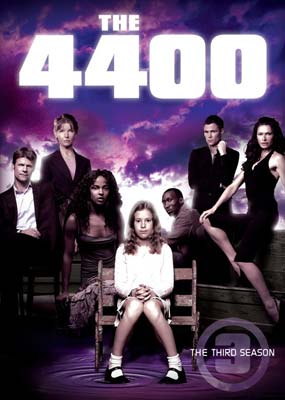
The 4400 - Season 3 (2006)


(Image from Slice of Sci-Fi)


The 4400 - Season 3 (2006)

I reviewed the second season of 'The 4400' back in June last year, and all I can say about the third season is that nothing much has changed since then. Here's what I concluded last time:

While it doesn't hold up against the best sci-fi dramas on TV (Lost, Battlestar Galactica, and (so far) Heroes*), it fills a niche for more sedate and safe sci-fi; it is entertaining even if it isn't always that thought provoking. I'm anticipating watching the third season, which promises increased friction between the 4400, the government, and the general population, which could result in some of that edginess the subject matter is ripe for.


Production values, storytelling style, acting - none of that has changed this season, so basically what I said in my review of the last season still applies. Worth noting perhaps is that the '4400 of the week' aspect that I wrote about where single episodes focused solely on a particular 4400 is still there but is handled much better, with those stories being integrated into the big picture in a more satisfying and substantial way. As for the season's overall storyline, it develops in the way I had hoped it would. The 4400s and the government are clearly at war, with a terrorist group formed by 4400s carrying out assassinations and making threats to a fearful populace. People are divided about what to do, and the government prepares itself for a conflict by running secret projects to help combat the 4400 'threat'. The 4400 are also divided, with many being afraid of the government after inhumane and illegal treatment; some feel pushed enough to side with the terrorists.

It's great stuff that is clearly an allegory for contemporary terrorism, the prevailing culture of fear, abuse of governmental power, and curtailment of civil rights, but as before the show doesn't take it far enough. This should be heavy subject matter, but after watching shows like 'Battlestar Galactica' and 'Lost' where the situations are pushed to extremes and characters are forced to make hard choices, 'The 4400' doesn't compare favourably. It always seems to have a convenient out that prevents it from ever really challenging its audience; whenever things start to look interesting, the writers always retreat back to safer territory.

An unexpected and irritating element this season is the spontaneous growing up of the Isabelle (Megalyn Echikunwoke) character and the death of her mother (apparently because the actress who played Lilly Tyler (Laura Allen) quit). One problem is how trite this 'fish out of water character trying to understand humanity' storyline is. Another is how tame her story arc ends up being - seriously, a large part of it involves forcing one of the other characters to marry her! The fact that Megalyn Echikunwoke just isn't that good at portraying what is meant to be an awe inspiring, powerful being, doesn't help the show too much either. The majority of the cast are fairly decent in their roles but no one really shines, with the exception being Billy Campbell as the enigmatic Jordan Collier, whose return is dramatic and really adds some much needed oomph to the show in the season's last few episodes.

The third season of the '4400' ends, once again, at a very interesting place. The stories being told are great, but the storytelling lacks the kind of bite that the subject matter really needs. It's sci-fi comfort food that dips its toes in the deep end of the edginess pool but never takes the plunge. And yet I still find the show strangely compelling even though I don't feel that deeply invested in it or its characters. The show only lasted one more season before being cancelled and I think the storylines are left unresolved, but I'll be sure to check it out just to see what happens next. And because it is fairly entertaining.

*and how that show disappointed by taking an interesting concept and ruining it with illogical nonsense and terrible revelations that culminated in a horrendously bad last few episodes.

Wednesday, February 27, 2008

The Shining (1980)


(Image from IMP Awards)


The Shining (1980)

Stanley Kubrick's 'The Shining', an adaptation of a Stephen King novel, is a horror film that is quite iconic - that scene with Jack Nicholson tearing through the door has been referenced and parodied on many an occasion - and is widely regarded as a classic of the genre. It is an incredible piece of film-making, one that manages to take a slight story and extract out of it copious amounts of tension and suspense.

Aspiring writer Jack Torrance (Nicholson) gets a job as the winter caretaker of the Overlook Hotel situated in an isolated mountainous area; the catch is that the previous caretaker went mad during the lonely winter stay and chopped up his wife and daughters before blowing his own brains out, but this doesn't bother Jack. He brings his wife Wendy (Shelley Duvall) and their son Danny (Danny Lloyd) to spend the months with him in the creepy hotel where he plans to while away the days writing his book. It is revealed that Danny is a special child who has supernatural powers - he is telepathic and has visions. Before the hotel is handed over to the Torrances, the head chef, Dick Hallorann (Scatman Crothers), tells Danny that he too has the same powers, called 'shining'. He also warns Danny to stay out of room 237 because it is dangerous. The family is then left completely alone in the spacious hotel, which has a hedge maze outside and enough food stored away to last them a long time. The hotel provides a fine environment for Danny to play in, when he's not seeing frightening images and being tempted by room 237 that is. As time passes by Jack, struggling with writer's block, slowly begins to go crazy as it becomes apparent that there is malevolent force in the hotel that is tormenting the Torrance family.

Simple framework for a story, but it's in the execution that Kubrick really knocks this one out of the park. Right from the opening helicopter shots showing the mountainous path leading up to the Overlook Hotel set to moody music, you know this is going to be something oppressive and creepy. Stanley Kubrick had a talent for making things look beautiful and disturbing at the same time, and the photography of this film features some amazing shots that are wondrous even today and evoke serious levels of dread. There are no quick cuts or sudden movements; instead, there's slow buildup of tension. The design work is incredible, with the empty hotel truly feeling like a malicious entity. Kubrick infuses the film with atmosphere and makes nearly every scene and innocuous action either unsettling or mysterious. The script is fairly lean and leaves a lot of stuff ambiguous, including the perplexing twist of an ending. The adaptation apparently deviates from the book significantly and takes away some of the plot and character elements, but it works brilliantly on its own terms to be honest, and I'll take Kubrick's sensibilities over King's more often than not. Forget monsters and ghosts; the sense of utter isolation and despair and the insanity that grips the inhabitants of the Overlook Hotel is more terrifying than any of those. Plus, there are supernatural ghostly goings on as well!

Jack Nicholson is crazy in this; one of the criticisms of his casting was that he seems crazy from the start, but that's just Nicholson. I think he seems mildly nutty at the start and is raving mad by the end. You could argue that his insanity isn't subtle, but so what - he is influenced by supernatural malevolence after all. And to be honest, the guy is pretty terrifying in the role and funny at the same time, a deadly combination that forces a bit of ambivalence upon the viewer. As his wife, Shelley Duvall is like a terrified mouse but one who is resourceful when push comes to shove. She gets a bit hysterical at times and perfectly conveys the sheer terror of her situation. Danny Lloyd is great as the frightened kid; he seems quite natural and his 'imaginary friend' voice is unsettling - "redrum redrum" indeed. Scatman Crothers is just OK as Hallorann, but there are some effective performances from the actors playing the hotel's more ghostly inhabitants.

'The Shining' is a classic and one that blew me away. I'm surprised at how I keep being surprised by not just how good Kubrick's films are, but by how much I actually enjoy them. My first experience of 2001 made me imagine that his films were all technical marvels that would fail to connect with me. 'A Clockwork Orange', 'Full Metal Jacket', 'Dr Strangelove', and now 'The Shining' have proven that little theory wrong, and I look forward to revisiting his and Arthur C. Clarke's landmark sci-fi film once more to see how I feel about it so many years later. As for this film, it's definitely a must see - don't expect a conventional horror film, and don't expect it to all even make sense in a narrative sense. It's an experience, and a memorable one at that.

Tuesday, February 26, 2008

Minority Report (2002)


(Image from IMP Awards)


Minority Report (2002)

Spielberg's follow up to AI was another sci-fi film, this time based on the short story 'The Minority Report' by P. K. Dick, an author famed for writing stories based on the nature of reality and self, and also for often writing while being on drugs. The original short is great, but the adaptation is only loosely based on it and is much more of a thriller than a sci-fi film.

John Anderton (Tom Cruise) heads the Pre-Crime Division of Police in Washington D.C. - it's a trial division that is on the verge of going national under the auspices of its director, Lamar Burgess (Max von Sydow). Pre-Crime works off the predictions of three mutant 'precogs' who can see future murders before they happen, allowing officers to swoop in and stop the killing. Pre-meditated murder is now a thing of the past, and only murders of passion take place anymore in the D.C. area. At a personal level Anderton is a messed up individual who takes drugs to numb the pain of losing his son some years earlier and subsequently separating from his wife (Kathryn Morris). The main narrative kicks off when Anderton himself is predicted by the precogs to commit (inexplicably, as it turns out) premeditated murder in the near future, something he believes to be impossible. Determined to prove his innocence, he runs and is pursued by FBI Agent Danny Witwer (Colin Farrell), a hotshot gunning for Anderton's job. Anderton learns of the possibility of a 'minority report' - a future vision by one of the precogs, Agatha (Samantha Morton), that differs from the other two - and seeks it out in the hope that it will clear his name.

'Minority Report' is a 'man on the run' thriller with sci-fi trappings; as a thriller, it's excellent, but as sci-fi film, I'm a little mixed. The themes of the film are similar to the original novel, dealing as it does with the concept of free will vs. fate, the morality and logic behind arresting people for crimes they haven't actually committed, and the messy consequences of being able to see the future. The stories are, however, quite different, and in fact the titular minority report doesn't even really come into play in the movie. Both plots involve the mechanics of precognition; I seem to recall the short story's plot being more satisfying, involving multiple potential timelines causing havoc, though I can't honestly remember the details (but I'm certain that it would have been too complex to have a chance of appearing in a mainstream film). In the movie there's a temporal paradox at play, where Anderton is set on the path to potentially commit murder only because he was predicted to do so in the first place. This paradox is an interesting conundrum, but the film doesn't really dwell too much on it. In fact, one of the irritating aspects of the story is how this paradox is essentially brought about by a character (in order to cover up another crime), implying that he understood it well enough to exploit it, yet it is never explained how he did it.

The film does, in the end, address the ethical aspect of arresting people who are destined to commit a crime, albeit only after addressing the free will vs. fate question, which is a bit of a cheat as it changes the rules of the game before committing itself. The ethics of the scenario presented at the start of the film are still somewhat murky and dubious, but then again this is a quite dark and somewhat dystopian future. Also disturbing is the manner in which pre-crime is handled - those arrested are judged beforehand and incarcerated immediately in a facility where they experience hallucinatory visions for the duration of their imprisonment. Other disturbing elements of this future are the complete erosion of civil liberties, the forfeiture of privacy thanks to ubiquitous retinal scanning systems, massive social inequality, and the obnoxious encroachment of advertising into all walks of life. Hang on... did I say the future?

Tom Cruise is fairly good as a man with his back against a wall desperately struggling to stay ahead of his pursuers, though the emotional stuff relating to his son comes across as a little forced. Farrell is great as the cocky and ambitious FBI agent who, despite being an arrogant prick, is damned good at his job. Samantha Morton is the standout as the precog Agatha, seeming completely screwed up in the head but not in that showboating way that gets on your nerves. Max von Sydow is solid as the experienced and dignified mentor figure, while Kathryn Morris is fine as Anderton's wife. Also very memorable is Peter Stormare as an unhinged unlicensed surgeon Anderton turns to to get a new pair of eyes in order to avoid the ubiquitous biometric systems.

Visually the film has a very distinctive, bleak look completely drained of colour that matches the generally dark and sometimes grungy atmosphere of the film and makes it very arresting. At a design level, much of the technology in this future is fantastic, such as the autopilot cars that drive up buildings right to an apartment, the re-usable digital newspapers, the funky computer user interfaces, the holographic display technology, and the virtual reality systems. Sadly, some of it is also kinda silly - like, for instance, the vomit sticks that cause their targets to... vomit. Why would you design something like that? The crawly mechanical spiders that are used in one scene are cool but have a little too much of a cutesy personality to them that rings false. And then there's the flying around on jetpacks that seems to serve no purpose other than to create an admittedly quite entertaining chase scene. That scene actually highlighted one of my beefs with the film - Spielberg's inconsistent tone that mixes a serious thriller atmosphere with jarringly out of place humour that takes you right out of the film. Overall though, the film is well directed and is suspenseful and exciting. The excellent special effects and fairly decent musical score (again, somewhat uneven from John Williams) round out what is a very slick package.

'Minority Report' is a very good film that has a few annoying flaws that almost ruin it for me. I don't like it much, and I think that its sci-fi trappings are often window dressing for a thriller and not integral to the story or all that well thought out, leading to some lapses in logic - a criticism I lay at the feet of the writers, since the film excels in almost every other regard. It's definitely a worthwhile cinematic experience, and judging from other opinions my relatively mixed review is something of a minority report itself (sorry, I couldn't resist).

Friday, February 22, 2008

Galaxy Quest (1999)


(Image from IMP Awards)


Galaxy Quest (1999)

'Galaxy Quest' is the best Star Trek film in years. Ironic since it is actually a reverent spoof of Star Trek, but that's testimony to how poor the Star Trek franchise has been in the last decade or so. It isn't really all that similar to Trek content wise; rather, it manages to pay homage to the sense of adventure and fun of the original series while incorporating all of the distinctive trappings of the Trek universe.

Tim Allen plays Jason Nesmith, an egomaniacal washed up actor who played the Captain on the defunct TV show Galaxy Quest, and who now spends his days attending fan conventions with his fellow former cast members. The other actors - Gwen (Sigourney Weaver), Alexander (Alan Rickman), Fred (Tony Shalhoub), and Tommy (Daryl Mitchell) - are less popular and resent Jason's grandstanding. Things take a bizarre turn when Jason and his 'crew' are mistaken for real space adventurers by a bunch of aliens called Thermians led by one Mathesar (Enrico Colantoni, aka Veronica Mars's dad); they are whisked away to a fully functional recreation of the show's ship to help the Thermians fend off the evil alien Sarris (Robin Sachs) and his marauding ship. The in over their heads actors are revered by the Thermians and this ego stoking spurs them on to help despite being clueless about what they're doing. Hilarious Star Trekking adventure ensues. Also in the mix are Sam Rockwell as a one time bit part character on the show who gets caught up with the main cast and beamed aboard the ship, and Justin Long as a die hard fanboy.

This is simply a wonderful film in every respect, and it's dismal box office performance is a shame, although on the bright side that will probably also prevent any ill advised sequels. The characters, particularly the main 'crew', are sympathetic and appealing; you can't help but cheer for these underdog lovable losers. The story, ludicrous as it is, is engaging from start to finish and the whole thing is fast paced, non stop entertainment. There's a fine balance between character moments and action, and all of it is quite funny and sometimes surprisingly affecting. It spoofs and pokes fun, but always in an affectionate manner. It's feel good in many ways, with the characters going through a journey of self discovery and learning to get along, but avoids being mawkish. The film has loads of atmosphere thanks in large part to the excellent production values and effects - seriously, this looks more like a real space ship and crew than much of modern Star Trek. It also feels much grander, like the dramatic reveal in the scene where the crew first behold their ship in space dock. The aliens also seem more alien than most of the cheap simplistic ridged foreheads that populate the Trek universe. And the space combat and action sequences are thrilling even when they're goofy! The film is a terrific blend of elements that just works, right up to its clever finish that parodies Star Trek TNG.

I quite liked Tim Allen in Home Improvement even though his shtick was repetitive, but everything else he has appeared in is / looks terrible. Except this - Allen is surprisingly good here, both as an arrogant actor and as a starship captain. The always great Alan Rickman is, unsurprisingly, great as the Shakespearian actor reduced to surviving off fan conventions while wearing tacky alien makeup. Sigourney Weaver, under appreciated as a comedic actress, is hilarious and kind of adorable as the dumb blonde whose function on the ship is to repeat what the ship's computer says. And then there's the brilliant Sam Rockwell as the 'extra' living in constant fear that he will die the same way insignificant characters on the show were offed early on "to prove how serious the situation is". Tony Shalhoub is very funny as the dry and seemingly unconcerned engineer. Daryl Mitchell rounds out the primary cast as the former child character all grown up, and he gets to pilot the ship while generally being irate (almost as irate as Rickman's Alexander). The cast really gels together and it feels like they really are bickering old friends - great casting and performances all round. And that's not even mentioning Colantoni, Sachs, Justin Long, Patrick Breen, and Missi Pyle, who all make memorable appearances.

'Galaxy Quest' is a fantastic sci-fi comedy and a must see for anyone who has ever enjoyed Star Trek, particularly the original series. Even for people who haven't experienced Star Trek, I can't see any reason not to recommend it; some of the references may be lost on them, but it stands on its own as a genuinely funny film that has aged very well and should be a comedy for the ages. "As long as there is injustice, whenever a Targathian baby cries out, wherever a distress signal sounds among the stars, we'll be there. This fine ship, this fine crew. Never give up... and never surrender."

Thursday, February 21, 2008

Clerks II (2006)


(Image from IMP Awards)


Clerks II (2006)

The follow up to Kevin Smith's breakthrough comedy 'Clerks' is in many ways more of the same but with a bigger budget and more contemporary pop culture references. A decade after the first film, Dante (Brian O'Halloran) and his lifelong buddy Randal (Jeff Anderson) work as clerks at Mooby's, a fast food restaurant, under the supervision of their boss Becky (Rosario Dawson). Dante is finally moving on with his life by marrying a woman named Emma (Jennifer Schwalbach) and moving out of New Jersey to work as a manager with her dad's company. The film takes place during his last day, as he deals with the implications of getting married to a woman who loves him but doesn't understand him while leaving behind his best friend and the woman who does understand him - Becky. Randal, still full of vindictive vitriol, has trouble coping with the imminent departure of his friend. Meanwhile Jay and Silent Bob (Jason Mewes and Kevin Smith) hang out outside Mooby's selling drugs. The drama between these characters plays out against the backdrop of working life at Mooby's, with various customers coming in during the day and being subjected to their antics.

'Clerks II' is a funny film. Visually it looks a far cry from the static camera work of the 94 original (not a criticism per se, it was low budget after all), but it still feels like a natural continuation of that story. It's mostly chuckle worthy but there are some but gusting moments in there as well. And it's definitely as crude and rude as the original. One of the problems with it, though, is that it feels too much like a retread, only with older characters. Twenty something guys living irresponsibly and immersing themselves in pop culture and crude conversations while under pressure to do something with their lives was a premise one could relate to and empathize with. When they're in their thirties, not so much. These guys haven't grown at all as people - they're still doing the same jobs and having the same conversations, and the only change on the horizon is a miraculous out for Dante by way of marriage. As a concept, I think this film needed to be tweaked and changed, because it feels too familiar.

The conclusion of the film is also one I'm mixed about - while it ends with the characters taking on more responsibility, it also ends with them being in a very similar situation, accepting their lot in life. This is portrayed as a happy ending. I can appreciate that conventional notions of happiness - having a well paying, 'important' job - aren't some kind of panacea that everyone should blindly seek, and the film does dare to be different by flagrantly eschewing these notions. BUT, I can't help but be disappointed that the characters haven't really shown any personal growth or maturity either. Is that something to be embraced? Is it OK to strive to be a man-child for your entire life? Should these guys still be talking Star Wars and crude humour and nothing else during their twilight years? I'm not saying they shouldn't talk about them (I probably will be), but aren't they ever going to broaden their horizons and talk about other things as well? Mind you I'm not really criticizing the film for having this perspective, and my feelings towards the ending are purely subjective; in fact, I'd have to say it has given me something to think about!

As a writer and director, Kevin Smith has obviously matured (even if his sense of humour hasn't, which is either a good or bad thing depending on your point of view) since the original and this film is stylistically worlds apart (let's face it, it's hard to say that the first film had any kind of style). The writing feels familiar though, but contemporized to incorporate new fodder for discussion. Still, I don't think it's quite as funny as the original. Also familiar are O'Halloran and Anderson, who are still the not so great actors they were in 1994. This was fine back then, but in this movie they play alongside the terrific Rosario Dawson who is simply in a different league, and they look a bit amateur as a result. Particularly O'Halloran, who has to play off of her in quite a few scenes.

All in all, 'Clerks II' is pretty good and worth watching if you even remotely enjoyed the original. Kevin Smith fans will love it - I think he definitely knows how to please his loyal followers. I had hoped to see something more but am fairly satisfied with the final result. As you may have guessed, I'm not the biggest Kevin Smith fan, but I generally like his movies and I love 'Chasing Amy', which I think is still his best film.

Tech Stuff

There's a brain control headset for gaming. It reads electrical impulses in the brain and can map facial expressions, emotions, and movements of a person directly into a gameworld. Needless to say - awesome! If the success of the Nintendo Wii has taught the gaming industry anything, it's that more intuitive and simple interfaces are the type of things that can lead to more entertaining, accessible, and innovative gameplay (which translates into greater profits, of course). And this type of interface should be just as usable for interaction with any computer system, not just games. This is the stuff of sci-fi come to life people! I for one welcome our new brain scan controller overlords!

There's also another interesting BBC article about the evolution of mobile phones as gaming platforms. Damn, these things are becoming more and more powerful; forget Tetris, we're talking genuine home console level gaming on mobiles. I guess it shouldn't be surprising, seeing how Sony's PSP did something similar by fitting last generation level console gaming into a handheld, but in the more limited and energy conserving form factor of mobiles? I'm impressed - I mean, these things have dedicated 3D graphics chipsets on board! Also cool are the potential interfaces, which include iPhone style touch interfaces and Wii style motion sensitive control systems.

Another (somewhat related) article is this one about how mobile smartphones will soon overtake laptops and become the mobile computer of choice. I have to confess, a few years ago I was one of those smug jackasses who'd sneer with contempt at gadget phones, arguing that there was no use for so much multimedia functionality. Phones should be for calls and texting, I argued. Well I'm eating humble pie, because to be honest the potential is huge and it's amazing what you can now do with these relatively affordable smartphones. They're getting some fairly powerful low energy consumption processors in there (even multicore!) that can match low end laptops in terms of basic functionality and applications both for work and for multimedia, including proper gaming (as above) and high def (720p) video. And this is on top of its use as a digital camera, a GPS device, and of course a phone! Yeah the size and interface are probably big stumbling blocks, but then some of these screens are decent sized and very high res, and there's even potential for a mobile projector. And there's always a roll up keyboard for typing. Even if you're not interested in mobile computing technology, the potential for more compact and energy conserving devices is something to be welcomed, as it will eventually filter through to the rest of the industry.

And finally, how could I not comment on the impending death of HDDVD? Yep, the format war is all but over and Sony and the Blu-Ray camp can rest easy. It's a good thing too, because the lack of a standard would have sucked and killed the possibility of there being a next gen successor to DVD. Actually, there still might not be - DVD is still pretty terrific and the leap from DVD to Blu-Ray is only in terms of picture quality. The leap from VHS to DVD was huge and allowed people to make the most of their existing televisions. Hi-def formats offer no significant new improvements apart from the picture (and sound), which require more expensive equipment to take advantage of in any case. And in the meantime, with ever improving video compression and global bandwidth increases, there's also the possibility that people will simply migrate from DVD to buying (or renting) movies online directly instead of moving en mass to a new disc format. Personally, I think Blu-Ray will take off but will never be as huge as DVD, and I think online video is still a long way off from becoming ubiquitous, simply because the network infrastructure isn't quite there yet and won't be for a while, and because there is no standard for online video distribution on the horizon.

And finally, a little humour to wrap up this post, courtesy of XKCD.

Tuesday, February 19, 2008

Point Break (1991)


(Image from IMDB)

Point Break (1991)

I'll state right up front that the only reason I watched this movie (and the only reason I watched Bad Boys II) is because of the way it was spoofed in the brilliant Hot Fuzz. It seems that 'Fuzz' is actually much better than both of the two movies it directly pays tribute to. Still, while it pales next to Edgar Wright's brilliant film, 'Point Break' is a fairly decent action movie.

Keanu Reeves plays Johnny Utah (awesome name), a young hotshot FBI Agent just transferred to the bank robbery division. He's partnered with Agent Angelo Pappas (Gary Busey), and together they wind up investigating a bank robber gang called 'The Dead Presidents' that the FBI has been unable to get even a single lead on. Pappas has a theory that the robbers are actually a group of surfers, and so Utah goes undercover to hang out with surfer gangs to try and suss out the criminals despite the protestations of their boss Agent Harp (John C. McGinley). It is here that he meets Tyler (Lori Petty), a woman who teaches him to surf and whom he falls in love with. Through Tyler he meets the charismatic Bodhi (Patrick Swayze), a master surfer who embraces the spiritual aspects of surfing and who sees in Utah a kindred spirit. As Utah and Pappas's (between these two and Bodhi, my 'weird names in the blog' quota has now been met) investigation leads them to a suspicious gang, an 'unexpected' twist throws things for a loop.

As bizarre as that plot sounds, it makes for a fairly entertaining and original film. The twist isn't all that surprising really; even though I knew about it before seeing the film, the way the story plays out it had to work out that way or the narrative focus of the first half of the film would have been somewhat redundant (in a mainstream film, at any rate). The script is quite cheesy and full of not so memorable lines and attempts to appear deep and spiritual on the part of the surfers, but I can forgive that because it's still fun and is never truly bad (plus some of that spiritual stuff ends up looking like hypocrisy in the story itself). There's a lot of diversity in this film in terms of action - surf boarding, sky diving, a thrilling foot chase in and around houses, bank robberies, shootouts - and director Kathryn Bigelow handles them all quite skillfully. And yes, I did bust a gut when the 'firing your gun in the air and yelling AAAAAAAH' scene came up! *BANG* *BANG* *BANG* AAAAAAAAAAAAAAAAAHHHHHHH!

Reeves is miscast in this role and is completely unconvincing, and some of his line deliveries are hilarious - "I AM AN F--B--I--AGENT!". He just seems too similar to his Bill and Ted persona playing at an FBI agent, and not like the persona that worked so well in Speed. Patrick Swayze is great as the enigmatic Bodhi, and it's easy to see how the Utah character gets caught up in his aura. As supporting cast, Lori Petty makes for an appealing love interest and Gary Busey is fairly goofy and effective as Utah's veteran partner (though it's kinda weird seeing him as a good guy). John C. McGinley - aka Dr. Cox from Scrubs - is a hoot as Utah's boss, and I wish there had been more of him. He gets some great snide, verbose lines, and anyone who's seen Scrubs knows how great McGinley is at unleashing that kind of material!

'Point Break' is a fairly enjoyable two hours with some very good action sequences. It's not brilliant, but it's not mediocre either. Good, but not great. There's extra entertainment value for fans of 'Hot Fuzz'.

Monday, February 18, 2008

West Bank Story (2005)


(Image from IMDB)

West Bank Story (2005)

'West Bank Story' is a charming and quite clever musical short film that spoofs West Side Story, only set in the West Bank. It tell of how a Palestinian woman, Fatima (Noureen DeWulf), who works in a Palestinian fast food falafel restaurant falls in love with David (Ben Newmark), an Israeli soldier stationed in the West Bank. Naturally the animosity between the Palestinians and the Israelis, here symbolized by the competition and resentment that exists between Fatima's restaurant and a competing Israeli restaurant next door, keeps the two apart. At a mere 21 minutes the film surprisingly crams in quite a bit - including a few musical numbers - while acting as a light hearted satire of the irrational unwillingness of the two sides to resolve differences through dialogue and compromise. The film is very slick and a touch unsubtle, but it's meant to be an overt lighthearted comedy, so I can't really hold that against it. Overall it's quite good and worth the small investment in time.

Friday, February 15, 2008

Look, Up in the Sky: The Amazing Story of Superman (2006)


(Image from IMDB)

Look, Up in the Sky: The Amazing Story of Superman (2006)

I haven't got much to say about this, really. It's a fairly informative and seemingly thorough but somewhat dry and ultimately unremarkable documentary about the history of Superman. Released at around the time of 'Superman Returns', it is obviously a tie-in for that film and is narrated by one of its stars, Kevin Spacey. Starting with the origins of the character in the 1930s, it chronicles his various incarnations in media, from the comics through to radio shows, cartoons, TV series, and movies, while also portraying the character and stories as a modern myth that stays relevant by adapting to the social climate of the day. There's plenty of interesting little nuggets, and some downright embarrassing stuff from the character's past. Many people related to the various incarnations of Superman are interviewed; for obvious reasons these tend to be people from Superman's more recent history. One of the disappointing aspects is that many key players fail to make an appearance - I can understand an elder statesman like Gene Hackman not showing up, but Tom Welling seriously had better things to do? All in all, this would have made for a fine extra on the Superman Returns DVD, but doesn't really warrant a separate release.